Public Attitude Under Scrutiny After Avenor Fire Reveals Infrastructure Gaps
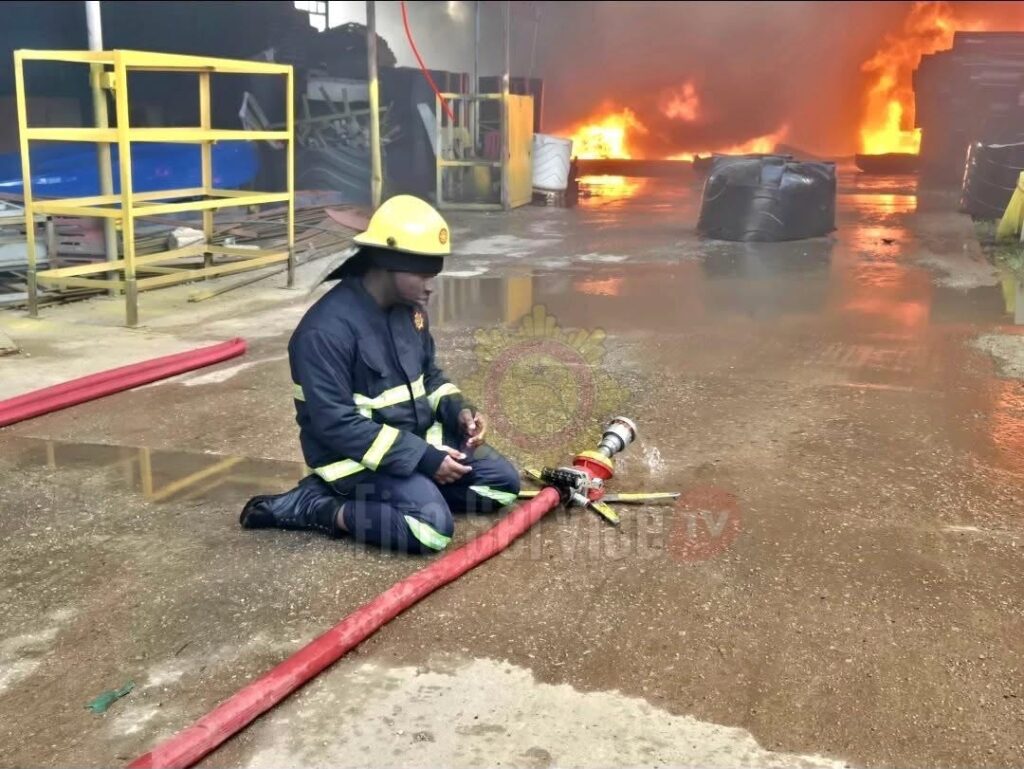
Fire at Avenor exposes blocked emergency routes, empty hydrants and the shared responsibility of citizens in fire safety.
The October 1 blaze at Avenor reignited scrutiny of Ghana’s firefighting capacity and citizen accountability. When emergencies erupt, the Ghana National Fire Service (GNFS) becomes the first institution judged by the public. Expectations are simple: arrive, deploy tenders and extinguish flames swiftly. Yet reality often defies that simplicity. At Avenor, firefighters encountered obstructed roads and structures that blocked tender access, forcing them to clear pathways before reaching the fire. This highlighted how citizen actions directly shape emergency response conditions.
The GNFS’s mandate extends far beyond arrival. Its duties include fire prevention, public education, emergency response, rescue operations and fire suppression. Chief Fire Officer Daniella Mawusi Ntow Sarpong has pursued reforms such as the Automated Fire Safety Compliance System to modernise inspections. Still, resource constraints remain stark. In June 2025 the government pledged to replace ageing tenders, and the 2026 budget allocated GH¢150 million for 100 new fire engines and assorted equipment. Interior Minister Mohammed-Mubarak Muntaka confirmed procurement processes were advanced by May 2026.
The Avenor incident revealed further gaps: a company official reported empty fire hydrants, and structures had been built on routes meant for emergency vehicles. These obstacles forced firefighters to contend with limited water sources and restricted access, underscoring that fire safety is a collective duty. The Interior Ministry has repeatedly stressed that compliance with fire‑safety laws must involve government, assemblies, property owners and individual citizens alike.
Accountability for the Service must be grounded in reality. Citizens cannot demand effective firefighting while simultaneously obstructing emergency routes, building in prohibited zones or neglecting safety standards. The path forward requires equipping the GNFS, enforcing planning regulations, maintaining hydrants and expanding public education. Only through shared responsibility can Ghana ensure its firefighters possess the tools, access and conditions needed to protect lives and property.