Victoria Bright warns against treating 48-hour rule as automatic detention entitlement for EOCO

Lawyer Victoria Bright says the 48-hour constitutional rule should not be used as a default basis for holding suspects, urging EOCO to justify continued detention of Manhyia South MP Nana Agyei Baffour Awuah.
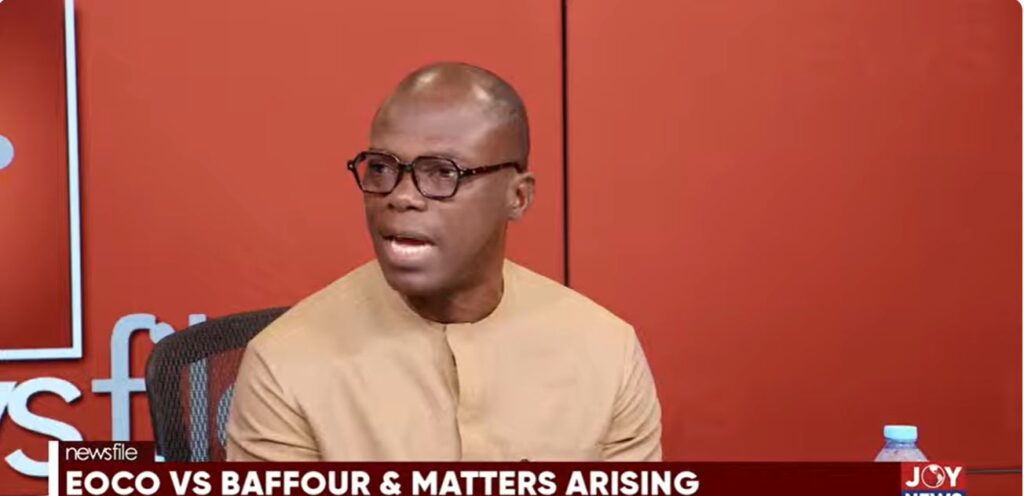
International corporate lawyer and entrepreneur Victoria Bright has challenged the practice of automatically applying the 48-hour constitutional detention rule as a justification for holding the Member of Parliament for Manhyia South, Nana Agyei Baffour Awuah, in custody. Speaking on JoyNews’ Newsfile on Saturday, October 3, she argued that the rule exists solely to prevent excessive detention and must not be treated as an entitlement for state agencies such as the Economic and Organised Crime Office (EOCO). Bright stressed that when a suspect is being held beyond the initial 48 hours, the investigating authority must clearly explain the specific investigative purpose served by the continued custody and bring the individual before the court without delay.
Her remarks follow the MP’s voluntary appearance at EOCO on October 1, 2023, to assist investigations into alleged financial misconduct involving SIC Life Savings and Loans. Although a High Court warrant had previously been secured for his arrest and searches of his office and residence, Bright highlighted that the MP is a sitting legislator whose constituency and place of residence are well known, and who presented himself to investigators of his own accord. She contended that these circumstances should be factored into any decision on whether further detention is necessary.
Bright’s comments come amid a broader public debate over the handling of the case, which has also seen statements from the MP’s legal representative, Samuel Atta Akyea, questioning the need for overnight detention after the MP’s voluntary cooperation. The EOCO has indicated it is coordinating with the Attorney-General’s Office to present the MP before a weekend court, citing adherence to constitutional timelines and procedural safeguards governing bail. The agency maintains that it is acting within the law while respecting due process.
This is not the first time the detention has sparked commentary from legal observers. Kofi Bentil, Deputy Executive Chair of the Institute of Economic Affairs, described the arrest as a political witch-hunt and argued that ordinary commercial judgments involving state entities should not automatically be criminalised. Victoria Bright echoed similar concerns, stating that criminal law cannot be used to penalise every poor commercial decision linked to a public institution.
Another legal voice, Godfred Dame, has publicly questioned the necessity of a two-night detention, pointing to the relatively modest sum of GH₵2.2 million involved and suggesting that the state’s investigative powers should not be wielded as a tool for political retribution. He has accused certain state institutions of overstepping their mandate in a manner that could undermine public confidence.
Despite the mounting criticism, EOCO has reiterated its commitment to concluding the matter promptly, stating that it is working closely with the Attorney-General’s Office to ensure the MP is brought before the court before the weekend, in line with applicable constitutional requirements. The agency has not indicated any intention to extend the detention beyond what it deems legally and procedurally justified.
The situation remains under close scrutiny as the legal teams involved await the next procedural step. Should the court approve bail or further remand, the outcome will likely influence ongoing discussions about the balance between investigative authority and individual rights in Ghana’s criminal justice system.