Mahama’s UNGA Agbada: When Presidential Dress Speaks

Experts say President Mahama’s UN attire carries deliberate political symbols, especially the Adinkra sign of hypocrisy.
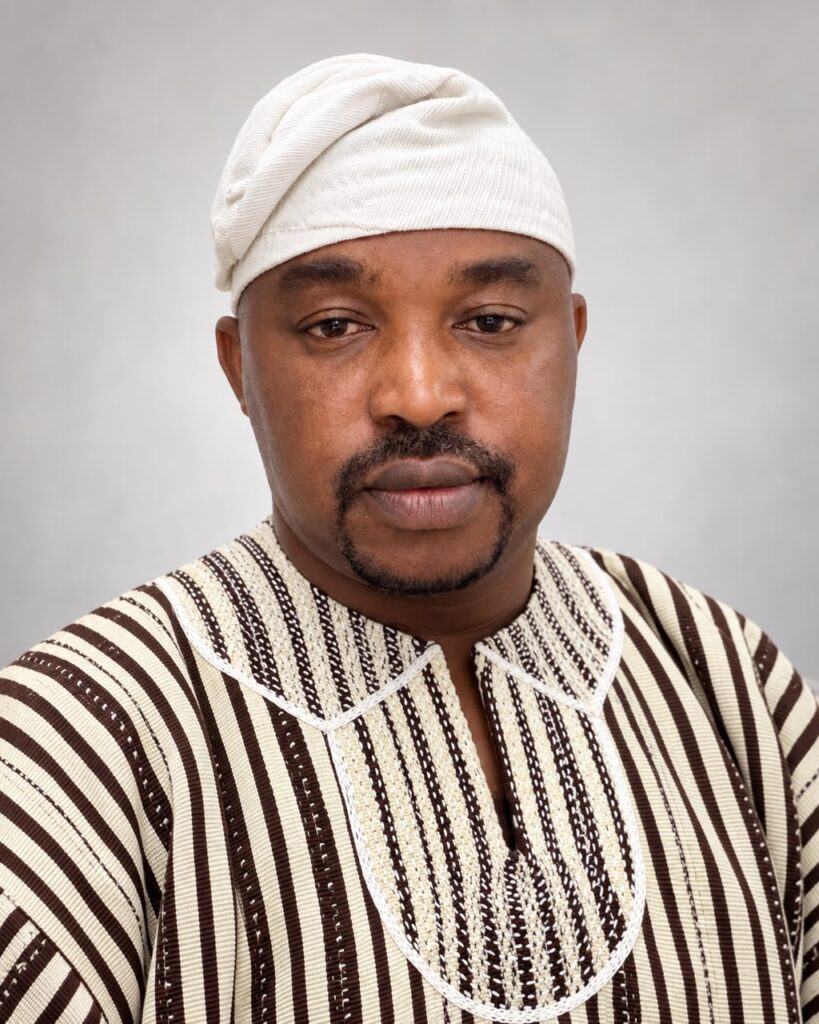
When President John Mahama walked into the 81st United Nations General Assembly wearing a crisp white three-piece agbada, the gaze of many observers followed the robe. The garment sparked immediate comment on social media and in diplomatic circles alike.
What catches the eye is not just the cut of the outfit but the large Adinkra symbol stitched down its front: Kramo Bɔne. Scholars have long argued that presidents do not wear clothes by accident, and in this case academic research confirms that Mahama’s sartorial choices are intentional political language.
A 2026 study in the African Identities journal, authored by Nyamawero Navei, Dickson Adom and Osuanyi Quaicoo Essel, examined Mahama’s 2025 inaugural outfit alongside his speech. The researchers found that his garments formed a deliberate narrative, using symbols such as Nyame Dua, Gye Nyame, Dwennimmen and Sankofa to project leadership qualities. The same team also highlighted the President’s active role as a “co-creator” of the ensemble, insisting on “something Ghana with Ghana”.
The garment’s maker confirmed that Mahama personally guided the selection of symbols, treating fashion as a “universal language” that could convey state messages. This view is reinforced by two further papers: Isaac Horsu and colleagues’s 2025 analysis in the International Journal of Language and Literary Studies, which treats the Adinkra motifs as persuasive communication, and a 2025 piece in Frontiers in Sociology by Ronald Osei Mensah et al., which surveyed traditional leaders, designers and cultural custodians on the meanings of the outfit.
One key symbol, Kramo Bɔne, translates literally from Akan proverb to “the bad Muslim has made it difficult for one to recognise a good one”. Adolph Hilary Agbo, author of a revised 2006 text on Adinkra values, interprets the proverb as a warning against pretence and hypocrisy, urging observers to look beyond surface appearances. In the context of Mahama’s UN address, the symbol takes on added weight: it flags the gap between declared ideals and actual practice.
Mahama’s speech at the UN touched on Gaza, the limits of international law, the absence of African representation on the Security Council and the need for reparatory justice for slavery. By pairing those words with Kramo Bɔne, the President invited the audience to question how institutions that preach equality may still operate on unequal power dynamics. The visual cue therefore becomes part of a broader critique of global governance.
Scholars note that the use of indigenous dress in international fora is not new. From the Limann era onward, Ghanaian presidents have referenced West African sartorial traditions to assert cultural identity in diplomatic settings. Today, the agbada serves both as a marker of regional heritage and as a platform for political semiotics.
The academic consensus is clear: Mahama’s UN attire is more than ceremonial; it is a calculated articulation of Ghanaian values on a world stage. Whether the message resonates with delegates will become clear as the session unfolds.
No further public events tied to this preparation have been announced.