Local Government Minister Orders GAPTE to Honor Conta Flow Schedule
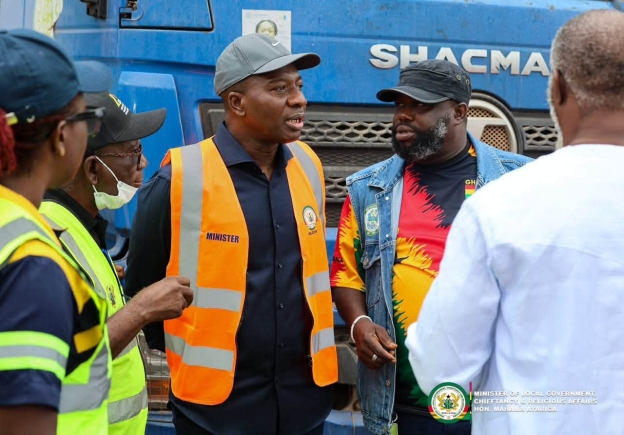
Mahama Ayariga demands Aayalolo buses depart exactly at advertised times to cement contra-flow reliability and reshape commuter habits. He cited Japan as a model as Accra expands the priority bus corridor across three corridors during peak hours.
The Minister of Local Government, Chieftaincy and Religious Affairs, Mahama Ayariga, has ordered the Greater Accra Passenger Transport Executive (GAPTE) to ensure Aayalolo buses depart exactly at the times they publish. He said the contra-flow system rolled out two days ago must embed a culture of punctuality across the metropolis.
Speaking at a closed door breakfast with development partners in Accra on Wednesday, September 30, the minister warned that a business as usual attitude where drivers linger for passengers would defeat the purpose of the initiative. He ordered managers to move the bus at 6:15 a.m. whether it carries a full load or not.
“Over time people will adjust their schedules to the 6:15 a.m. departure and that will change behaviour for the better,” he said. He recalled a trip to Japan fifteen years ago when a train left precisely at 6:25 a.m. and said Ghana could use the contra-flow model as a starting point for similar discipline.
The contra-flow arrangement allows Aayalolo BRT buses to travel against normal traffic on designated corridors during peak hours. The Ministry announced last Tuesday the system now covers three corridors: Amasaman–Accra, Adentan–Accra and Kasoa–Accra. Operations run from 6 a.m. to 9 a.m. and from 4 p.m. to 8 p.m.
Officials said the design reduces congestion on key routes into the Central Business District. The Ghana Police MTTD, the Department of Urban Roads and GAPTE are partners in the effort. Dawuda Awudu, Managing Director of GAPTE, last Monday told reporters the initiative would free commuters from gridlock and support economic activity after work hours.
He stressed that success depends on reliable transport that keeps the city moving beyond office hours. The minister called on local officials to use the pilot as a template for other reforms in urban management.